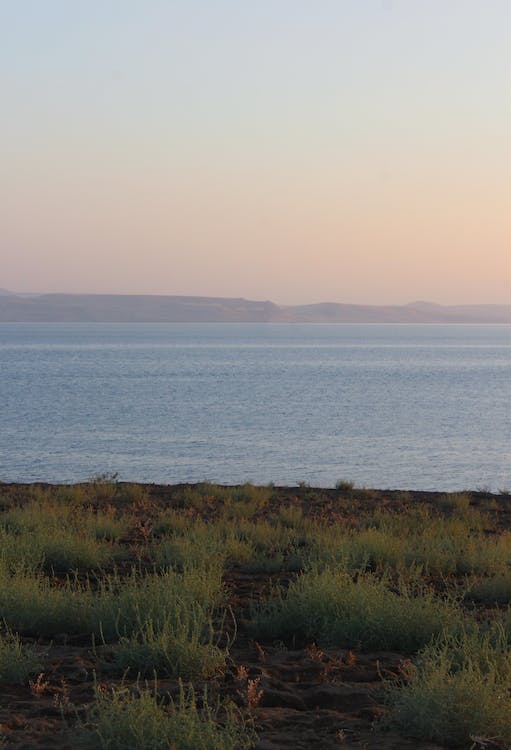
Are you running from God or running towards Him? Are you hiding from the Lord, or is your life hidden in Messiah? Are you fleeing from God or following Him? Jonah knew where he was going and initially, he was running from God, hiding from God and fleeing from Him, yet the Lord was still gracious to him. The Lord then used Jonah to preach to the Ninevites who repented and turned to Him. By God’s providence and before going to Nineveh, the Lord also enabled Jonah to be a witness to the heathen mariners.
Previously, we considered Jonah as a prophet and the settings and themes of the book. From the first verse and outset of the book, the historical reliability was demonstrated since Jonah 1:1 was cross referenced with that crucial other reference, 2 Kings 14:25. Unmistakeably, 2 Kings 14:25 confirms Jonah as a historical character as the son of Amittai and also a prophet and that Jeroboam restored Israel’s territory from the entrance of Hamath to the sea of Arabah (the Dead Sea). Jonah was from Gath (Galilee) and like Yeshua (Jesus) Jonah was a prophetic type of our Lord. 2 Kings 14:25 confirms Jonah’s prophecy was fulfilled and in addition, Josephus refers to Jonah as a ‘prophet’.
Nineveh has been excavated by some of the pioneers of biblical archaeology including the likes of Austen Henry Layard and Henry Rawlinson. Restoration work is currently underway in a joint venture between Iraq, France and the United States. The immense size of Nineveh has been confirmed as a ‘great city’ and fits with Jonah’s account of a three-day journey. Furthermore, the brutality, cruelty and violence of the Assyrians, has been preserved on their palaces and remains inscribed on the palace walls. Jonah was only too aware of that and was aiming to distance himself from Nineveh.
Fleeing from God
Therefore, Jonah set out for Tarshish, which is 2500 miles west, rather than Nineveh which is 550 miles northeast. Ships of Tarshish were famous for trade and Solomon had merchant ships bringing gold and silver to him. Back in Genesis 10:4, Tarshish was a son of Javan, great grandson of Noah and presumably a father of mediterranean people. Jonah was supposed to bear east but he was heading west and ventured in that direction as far as he could.
Jonah was fleeing from ‘the presence of the Lord’ an expression used twice in Jonah 1:3 and once in Jonah 1:10. Have you ever tried to flee from the presence of the Lord? If so, did you succeed in doing so? The Psalmist stated, “Where can I flee from your presence?” (Psalm 139:7) In the Garden of Eden, Adam and Eve tried to flee from the Lord’s presence and it is always futile to attempt to hide from God.
Jonah departed from Joppa towards Tarshish. You may never have heard of ‘Joppa cakes’ though I am pretty sure you will recognise Jaffa cakes and oranges! Joppa was a walled town 35 miles from Jerusalem. Ancient Joppa is modern day Jaffa, near Tel Aviv. Joppa has a long-attested history in the Scriptures and ancient history. Remember the book of Jonah is a historical account, not an allegory. In 2 Chronicles 2:16, Hiram, King of Tyre brought wood from Lebanon by sea to Joppa to be transported to Jerusalem. Also, in AD66, the Romans killed many inhabitants of Joppa and destroyed the city.
Think about Jaffa today. Where do your oranges come from? Have you ever eaten a Jaffa orange? Isaiah 27:6 tells us “Those who come He shall cause to take root in Jacob; Israel shall blossom and bud and fill the face of the world with fruit.” A striking phenomenon in Israel today is the vast beautiful plantations of fruit in the dry, arid desert. So this is both historical confirmation of biblical locations and tangible evidence of fulfilled prophecy.
The Lord sent a great wind, described as a mighty tempest and the ship which Jonah was on, was about to be broken up. Imagine you were being thrown around in those treacherous waters and you are clinging to the ship? What use is a ship if your trusty vessel is about to be smashed to smithereens? Even the mariners were afraid. Consider that they were probably hardened seafarers who could handle hardships and life at sea. This was their livelihood and they would have experienced other storms before, although this mighty tempest, was something extraordinary.
The mariners turn to the Lord
Did you notice the absence of Atheists on the journey bound for Tarshish and what followed? Every man cried out to their own god and it was every man for himself as they tried to survive. Is it not strange that those who say that they do not believe in God, sometimes curse Him? Also, others who apparently do not believe in Him will pray to Him when they are about to be shipwrecked in the storms of life.
We do not know exactly who was in the boat, but we do know that Joppa was a seaport and Tarshish a Mediterranean location. Some commentators state that they would likely have been Phoenician mariners, crying out to several gods. There was Baal, who amongst other things was supposed to be able to control storms. There was Dagon, the fish god who had the appearance of being half-fish and half-man. Many in the Ancient World believed in gods who ruled specific locations or who possessed particular powers. The mariners were afraid, crying out to their respective gods but to no avail.
These situations help us to think clearly and determine with clarity and certainty, what is most important in life. It was now all hands-on deck since they faced a survival situation. Precious cargo was thrown to the sea to lighten the load. Like us, the mariners mistakenly try to find a practical, earthly solution to a spiritual problem and it never works. The mariners thought that their greatest need was to be saved from the perilous storm in an effort to reach dry land. They had no comprehension that their lives would be spared, or that they would soon know that salvation is from the Lord.
It would have been humorous if it were not life threatening, yet Jonah was slumbering, lying fast asleep on the lowest part of the ship. We cannot fail to notice the comparison with our Lord, fast asleep during the great storm on Galilee. His disciples were troubled since they were perishing, the waves beat against the boat and it was filling with water. Jonah is a prophetic type of Messiah. Yet Jesus was innocent and the wind and waves obeyed Him. How ironic that at this point, the captain was desperate and calls on Jonah to pray to his God.
Have you ever had friends, or friends of friends, who are not trusting in the Lord, yet they ask you to pray for them? I had that recently when someone I had never met before asked me to pray for a dear friend of hers. She was like that captain and God hears our prayers. The captain came to the reality that their gods and their methods would not save them. They were searching and perhaps even on a spiritual quest. And so they cast lots and the lot fell on Jonah. There was something unusual about Jonah. Ironically, the mariners were searching and looking for the God that Jonah was running from and hiding from.
Throughout this whole episode and considering their predicament, the respectful conduct of the mariners towards Jonah is astonishing. They are fighting for their lives whilst Jonah is sleeping. One might expect him to be rudely awoken with a knuckle sandwich or pulled onto his feet by his hair or nostrils. Careful reading shows that they do all they can to preserve Jonah’s life, although the troubles they are experiencing are his fault. Jonah’s response is concise yet crystal clear. Firstly, Jonah explained that he was a Hebrew, one who had crossed over. His ancestors had crossed the Red Sea and the River Jordan. But a believer in Messiah has crossed from death to life since they are trusting in the Saviour.
God made the sea and the dry land
Secondly, Jonah feared the Lord. Some say they believe in Jesus and they go to meetings, yet they have little interest in the things of the Lord. A solid mark of a believer is someone who fears the Lord, recognises He is holy and reveres Him. Thirdly Jonah speaks of “The God of heaven, who made the sea and the dry land.” The implication is obvious and that would have caught their attention! They were about to perish at sea and Jonah informed them that his God made the sea and the dry land.
King Canute and the waves is a famous story and serves to illustrate a pertinent point here. Helene Guerber from ‘Heritage History’ writes: “One day, at low tide, he bade his servants place his throne far down upon the beach; and accompanied by his courtiers, in their richest robes, he went down there and took his seat. Grouped around him, and still paying their stupid compliments, the courtiers kept a watchful eye upon the waves, for they did not wish to get their clothes wet.
When the tide turned they ventured to suggest to the king that he have his throne set farther on the beach. Canute earnestly said that he did not want to move, and that as they vowed he was Lord of land and sea, he would bid the waves stand still. But although he stretched out his sceptre and ordered the water not to come near him, the waves rose higher and higher, till the spray drenched the courtiers’ fine clothes and forced them and the king to beat a hasty retreat.
When they were beyond reach of the tide, Canute gravely told his courtiers that God alone was master of the sea, and made them feel so ashamed of their senseless talk that they never ventured to flatter him again.”[i]
So how do we share the gospel with people who know little of God or the Bible? We must do what Jonah did in the tempest and what Paul did amongst the philosophers in Athens. We all know that there is a God since the invisible attributes of God are clearly seen by the things that are made (Romans 1:20). Hence, we must commence with the Creator who is Lord of His creation. The Psalmist declared, “The heavens declare the glory of God; And the firmament shows His handiwork.” (Psalm 19:1) No doubt the mariners would regularly look to the stars for the purpose of navigation and here again, the creation testifies of the Creator.
Even though Jonah had disobeyed the Lord, God was now using Jonah to point mariners towards Him. How much wiser it is for us to follow and serve the Lord rather than chartering our own course through treacherous waters. The question to Jonah, “Why have you done this?” may have been born out of frustration rather than seeking an answer. However the remark, “What shall we do to you that the sea may be calm for us?” is different. They were now considering how they could appease Jonah’s God. Hence the next question, “what shall we do to you?” Would Jonah become some sort of an offering, or a sacrifice to appease the Hebrew God?
Following God
Jonah urged the sailors to hurl him into the sea and there is also prophetic typology of One far greater. This reminds us of Messiah who gave His life freely although He was entirely innocent. Jesus the Messiah gave His life in exchange for ours as a propitiatory sacrifice, appeasing the wrath of God. He who knew no sin became sin for us that we might become the righteousness of God (2 Corinthians 5:21).
What course of action did the mariners take next? Sadly and perhaps predictably, they did what many do when they first hear the gospel. They had been given the only possible solution, to turn to the Lord and not to trust in themselves and to trust in what the Saviour has done. We must trust in His atoning sacrifice. He is the innocent One and the only one who has the power to forgive sins and He gave Himself that we might live. You cannot save yourself, but if you trust in Him, you will live. Leave the pleasure boat and cling to the lifeboat!
Instead, the mariners rowed hard to return to the land, but the storm was too strong. It reminds me of the galley slaves in Ben Hur, rowing hard to stay alive, but with no prospect of freedom. Some hear the gospel and through the monotony and their meaningless predicament, they just keep on rowing. They row more vigorously, bail out the luxuries and continue to row harder in an effort to save themselves. They attempt to be good and kind, to give more, to be more patient, sacrificial and even forgiving. But row and row as hard as they might, they can never make it to dry land.
Then they recognise that they can never appease God’s wrath and all their efforts are in vain and futile. They cannot make themselves acceptable before God, so at last, they cry out to Him and their prayer is heard. Rather than relying on their works, they are the recipients of God’s mercy and grace. They have humbled themselves and recognised that God is sovereign and will do what He pleases.
Consider why the mariners threw Jonah into the raging sea? Was it because he implored them to and the sea would be calm? To their credit, they were reluctant to do that. By throwing Jonah into the sea they are beginning to exercise faith in Jonah’s God. Faith in the Lord requires knowledge, belief and action and this is an act of obedience. Faith is more than an intellectual proposition. They had honourably attempted to spare Jonah’s life and after listening to him, threw him into the sea which was immediately calmed and the effect was instant. As the old hymn states, “The vilest offender who truly believes that moment from Jesus a pardon receives.”
Part way through chapter one the mariners were afraid, but near the close of the chapter, they feared the Lord exceedingly. This is the same phrase in Mark 4:41 where Jesus calmed the storm and His disciples ‘feared exceedingly.’ The men offered a sacrifice and took vows. There was a change of heart and genuine repentance. In the Lord’s providence he used this great Hebrew prophet to reach the sea faring Gentiles.
A Jewish man brings good news to the Gentiles
Now let us turn our attention to somewhere nearer to home, namely Leigh-On-Sea. Ridley Chaim Herschell was a gifted Jewish evangelist who resided for just a couple of years in Leigh-On-Sea. With God’s enabling in those two years, Chaim profoundly transformed the area. He is mentioned in the 1906 Jewish Encyclopaedia[ii] and there is an article about him in the Southend and Westcliff Hebrew Congregation magazine[iii]. Herschell house is next to St Clements Church. I have passed by Herschell Road more times than I can remember and it never ceases to inspire me.
Today, Leigh-On-Sea is a desirable place to live, but that was not the case 200 years ago. It was a fishing village, exceptionally rough, but that was about to change. Leigh-On-sea was dramatically transformed, schools were established for boys and girls and the poor were helped. The gospel was preached and this Jewish believer helped both Jewish and Gentile people. Like Jonah, Chaim Herschell brought the gospel to the Gentiles.
Michael Tomlin was a giant of a man who drank heavily and so many from Leigh-On-Sea were wary of him. He is famously remembered for rowing 35 miles from Leigh-On-Sea to Billingsgate Market. He rowed with his friend and their catch of fish. Like Jonah, on the return journey, his friend fell asleep! Michael rowed him home, but he was curious and after he returned to shore and was interested to hear Chaim Herschell preach. Michael quickly came under conviction of sin, his life was changed and he would never be the same again. Chaim means ‘life’ as in the saying, ‘L’ Chaim’ to life. Michael passed from death to life by trusting in Messiah. Formerly Michael was illiterate, yet he learned to read the Bible, became a minister and preached the gospel.
Jonah was part of God’s plan to bring the gospel to Gentile people and what a blessing that is. Michael Tomlin was no longer rowing hard like Jonah’s mariners trying to reach dry land. His life had changed direction and like Jonah he was now heading on a different course. So which direction are you heading? If you have not already changed course, you must do so, otherwise you will perish. So do not run from God but rather run to Him and follow Him. Do not flee from God but instead fear Him. And do not hide from God but rather be found with Him and rooted in Him.
[i] Helene Guerber Story of the English Canute and the Waves Heritage History https://www.heritage-history.com/index.php?c=read&author=guerber&book=english&story=canute
[ii] Joseph Jacobs, Jacob Lipkind Herschell, Ridley Haim https://www.jewishencyclopedia.com/articles/7613-herschell-ridley-haim
[iii] Anne Marcus Leigh-On-Sea Part 2 Community Voice Volume 57 September/October/November 2016 Southend & Westcliff Hebrew Congregation https://swhc.org.uk/wp-content/uploads/2016/12/136781-Book.pdf