Philo was a slightly earlier contemporary of Josephus although he is not so well known or quoted. His writings are of value concerning Jewish history, biblical background and reference to biblical characters. Not much is known concerning his life, though essentially he was a chief representative for the Jewish people in Alexandria, Egypt, in the embassy to the Emperor Gaius (Caligula).[i] He lived around the time of Jesus and was an early Jewish interpreter renowned for his use of allegory.[ii] Due to his inclination for Platonic philosophy, he is considered the Hebrew Plato[iii] and his allegorical method influenced many Early Church Fathers including Clement of Alexandria, Justin Martyr, Origen, Ambrose, Augustine et al[iv],
Philo’s family also have important connections regarding Jewish history and attestation for biblical history and in addition, concur with Josephus. Philo’s brother, Alexander was employed in various offices for Rome in Egypt and used his considerable wealth to plate the gates of the temple in Jerusalem with silver and gold and to make a loan to Herod Agrippa I (cf. Josephus, Jewish Antiquities 18:159-160; Jewish War 5.205).[v] I have used bold text to draw attention to biblical characters and this is Herod the King from Acts 12:1-6, who killed James, the brother of John and imprisoned Peter.
Philo’s nephew, Tiberius Alexander, would become procurator of Judea and prefect of Egypt having departed from the Jewish faith.[vi] One of Philo’s nephews, Marcus, married Bernice, the daughter of Herod Agrippa I, (cf. Josephus, Jewish Antiquities, 19.276-277 who was the Bernice mentioned in Acts 25:13, 23; 26:30).[vii]
Philo and Josephus
Josephus writes concerning the disturbance in Alexandria between the Jewish inhabitants and the Greeks and that three ambassadors were selected out of each party who were at variance who went to Gaius.[viii]Also, that Philo the principal of the Jewish delegation who was highly respected and skilful in philosophy, was prepared to make his defence against the things said by Apion, who was an ambassador from Alexandria and who intended to provoke Gaius to anger against the Jews.[ix] Interestingly the works of Josephus include Book I and Book II of ‘Against Apion’.
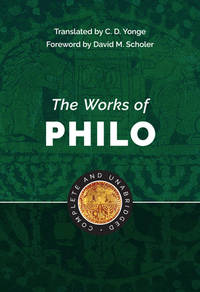
I am using Yonge’s new and updated complete and unabridged works of Philo, though I will focus on just two small sections of his corpus, namely, ‘Flaccus’ and ‘On the Embassy to Gaius’ rather than his voluminous works on the writings of Moses. In the foreword of Yonge’s translation, the text agrees with Josephus account, that Philo was selected to lead the Jewish delegation to Rome to see Gaius Caligula, since there was an emergency in the Jewish community related to the pogrom that commenced in AD 38 by the prefect Flaccus.[x]
Alexandria
Since Alexandria is the setting of both ‘Flaccus’ and ‘On the Embassy to Gaius’, a little background to this city is imperative. Alexandria was founded by Alexander the Great with the purpose of being an outstanding Hellenistic cultural and academic centre.[xi]Philo’s municipal residence was Alexandria, which was second only to Athens as the most celebrated seat of philosophy in the world and was a long-established favoured dwelling of the erudite Jewish population and Philo also mentions visiting Jerusalem.[xii] The city was divided into sections. There was a well-established Jewish community under their own ethnarch, though they were restricted to their own quarter in AD 38.[xiii] Alexandria possessed the greatest library in the ancient world containing in excess of 500,000 volumes and it became the most vital centre of Judaism outside Jerusalem.[xiv]
Alexandria is mentioned in a few places in the book of Acts. In Acts 6:9, the synagogue of the Freedman (Cyrenians, Alexandrians, and those from Cilicia and Asia), disputed with Stephen. In Acts 18:24, a certain eloquent Jewish man, Apollos who was born at Alexandria was mighty in the Scriptures, came to Ephesus and later spoke boldly in the Scriptures and showed from the Scriptures that Jesus is the Messiah (Acts 18:24-28). In Acts 27:6, Paul was on a voyage to Rome and the centurion found an Alexandrian ship sailing to Italy and put them on board. Also in Acts 28:11, “After three months we sailed in an Alexandrian ship whose figurehead was the Twin brothers, which had wintered at the Island.”
The Twin Brothers refer to Castor and Pollux and in ‘The Embassy to Gaius’, Philo writes that “Again, it is said that the twin sons of Jupiter Castor and Pollux, are partakers of immortality.”[xv]Emperor Gaius compared himself with Jupiter and many other Roman gods in an attempt to be recognised as a living god and even dressed in imitation of Castor and Pollux, Hercules or Bacchus.[xvi]Philo’s writing is heavily rhetoric and exposes the vanity of Caligula’s delusions. Sadly Gaius had a vehement hatred and antagonism towards Jewish people and encouraged others to do the same. His reign was just under four years.
Flaccus
Tiberius Caesar selected Flaccus to be viceroy of Alexandria and the near country.[xvii] This is the Tiberius Caesar referred to in Luke 3:1, whilst Pontius Pilate was governor of Judea, Herod was tetrarch of Galilee, his brother Philip was tetrarch of Iturea and the region of Trachonitis and Lysanias tetrarch of Abilene. Philo later refers to Pontius Pilate and Philip the tetrarch in his writings.
Philo states, “Gaius Caesar gave Agrippa, the grandson of Herod the King, the third part of his paternal inheritance as a sovereignty, which Philip the tetrarch, who was his uncle on his father’s side, had previously enjoyed.”[xviii] Herod the King is also known as Herod the Great and in addition to undertaking extensive work on the temple in Jerusalem, he put to death all the male children in Bethlehem and all its districts in Matthew 2:16 and sadly fulfilling what was spoken by the prophet Jeremiah (Matthew 2:17-18; cf. Jeremiah 31:15).
Matthew 2 also records the visit of the Magi who followed the star in the East and had come to worship the King of the Jews. In a different book, ‘Every good man is free’, Philo makes a comment concerning them. “Among the Persians there is the body of the Magi, who, investigating the works of nature for the purpose of becoming acquainted with the truth, do at their leisure become initiated themselves and initiate others in the divine virtues by very clear explanations.”[xix]
When Tiberius died and Gaius succeeded him as emperor, Flaccus proceeded to persecute the Jewish population in Alexandria and incited others to do the same. Flaccus permitted the mob to set up statues in the synagogues and it was apparent that what took rise in Alexandria would instantly spread throughout Egypt and to other nations.[xx]Flaccus then attempted to destroy Jewish constitution, national customs, lawful political rights and social privileges.[xxi]
Philo explains that Flaccus was effectively accuser, enemy, witness, judge and executioner and permitted those who sought to exterminate the Jews as prisoners of war.[xxii]There were five districts in the city and the Jewish population were confined into a very small portion of one.[xxiii]This immediately brings to mind the Ghetto’s in Europe during WWII. In Alexandria, since no one hindered them, Jewish shops were broken into and those who had lent money lost money and usual means of employment were prohibited. Again this echoes Nazi Germany and also similar despicable treatment of Jewish people in Europe during the Middle Ages. Philo writes of savage madness including stoning, beating and burning whole families.[xxiv]
When Agrippa the King came to the country, they explained all that Flaccus had done and he promised to take a decree to the emperor. Ironically, Flaccus was arrested during the Feast of Tabernacles though the Jewish people could not observe the festival because of the oppression.[xxv] On hearing of the arrest they sang a hymn and gave thanks to God for their deliverance and being relieved from continual and incessant oppressions.[xxvi]
Philo recalls Flaccus’ own words. “O King of gods and men! You are not, then indifferent to the Jewish nation, nor are the assertions which they relate with respect to your providence false; but those men who say that that people has not you for their champion and defender, are far from a correct opinion. And I am evident proof of this; for all the frantic designs which I conceived against the Jews, I now suffer myself.”[xxvii]
Philo’s final paragraph in this book summarises divine justice. “Such was the end of Flaccus, who suffered thus, being made the most manifest evidence that the nation of the Jews is not left destitute of the providential assistance of God.” When one considers biblical history and Jewish history throughout the ages, the same pattern emerges.
On the Embassy to Gaius
Gaius sought to be revered as a god and went to excessive theatrical means to portray that. He was especially suspicious with regard to Jewish people as if they were the only people who possessed desires opposed to his own.[xxviii]He regarded Jewish people not simply as slaves but as the lowest and most dishonoured of them.[xxix]Synagogues were razed to their foundations and burnt whilst conspicuous images of Gaius were erected.[xxx]Gaius planned to have an enormous statue of himself in the Jerusalem Temple with his own name inscribed with the title of Jupiter[xxxi]although he was assassinated in AD41 before his order could be enforced.
Gaius ordered Petronius to install the statue though Philo and others managed to convince Petronius to delay its installation so that they could send an embassy to him.[xxxii]Petronius subsequently wrote to Gaius providing little information other than stating that since the time of year was the height of the wheat harvest and other cereal crops, the men might conceive such a contempt for life that they burn all their crops.[xxxiii]
This communication made Gaius furious since Petronius appeared indifferent to his commands.[xxxiv]Soon afterwards King Agrippa arrived in Rome having no knowledge of Gaius and Petronius’ communications and could perceive that Gaius was livid and was fearful that Gaius’ anger was directed towards him.[xxxv]Gaius stated to King Agrippa that the only nation on earth who he was not esteemed to be a god, refused to install the statue of Jupiter and was plotting his death.[xxxvi]
King Agrippa was so affected that he lay in a state of profound stupor, completely unconscious but on waking and having taken tablets he wrote to Gaius pleading on behalf of his country[xxxvii] and explained the reverence for God esteemed by his ancestors in the temple regarding pictures and images as representations of the invisible God.[xxxviii]
He also drew attention to Tiberius who preserved the form of worship in the temple as it had been known from earliest of times.[xxxix] King Agrippa added that Pontius Pilate was one of the emperor’s lieutenants and appointed governor of Judea and in an effort to honour Tiberius dedicated some gilt shields in the palace of Herod in the holy city. The people were greatly angered and sought to appeal to Tiberius, so Tiberius ordered the shields to be taken from Judea to Caesarea Augustus that they might be set up in the temple of Augustus.[xl]
King Agrippa then spoke well of Augustus since on hearing that the first fruits were neglected, he enabled them to assemble in the synagogues and convey the holy things to Jerusalem and that no one should hinder the Jews either on their way to the synagogues, or when bringing their contributions, or in obedience to their national laws in Jerusalem and even commanded that perfect sacrifices of whole burnt offerings be offered to the most high God every day.[xli]
Gaiusresponse was ambivalent. He stated to Agrippa that the erection of the statue would not take place and letters were written to Petronius not to allow any innovations or alterations to be made to the Jewish temple.[xlii] However if any people, with the exception of the metropolis itself in bordering countries refused to allow that those who wished to erect statues of him, were hindered from doing so, they would either be punished or brought before a tribunal.[xliii] Almost predictably in Alexandria and other cities he filled them with images and statues of himself.[xliv]
The embassy was a strange affair, more akin to a theatre or prison than a court of justice.[xlv]Gaius enquired why they abstained from pig’s flesh and then jested, trifled and ridiculed them.[xlvi]Philo describes the pleadings as broken up, cut short and interrupted and then Gaius strangely took compassion on them and turned his mind to pity concluding, “These men do not appear to me so wicked so much as unfortunate and foolish, in not believing that I have been endowed with the nature of God,” so he dismissed us, and commanded us to depart.”[xlvii]
Closing thoughts
Philo brings valuable insight regarding Jewish history and survival. It is useful to read Philo alongside Josephus, but most importantly in connection with the Bible. In addition to Augustus Caesar and Tiberius Caesar, Philo provides important historical attestation for other biblical characters including Herod the Great, Herod Agrippa I, Philip the tetrarch and Pontius Pilate, governor of Judea. Philo could recognise the providential assistance of God when Flaccus was finally removed from Alexandria. The Lord is sovereign over all history, but do you know Him personally? Can you see Him shaping events in your life through His providential assistance? Are you trusting and following the God who knows the end from the beginning?
[i] New Bible Dictionary Second Edition Organising Editor J. D. Douglas (IVP, 1994; Leicester), p933
[ii] Holman Illustrated Bible Dictionary General Editors Chad Owen Brand, Charles W. Draper & Archie W. England (Holman, 2003; Nashville), p1293
[iii] Norman L. Geisler The Big Book of Christian Apologetics (Baker Books, 2012; Grand Rapids), p437
[iv] Ibid, p437
[v] The Works of Philo Complete and Unabridged New Updated Version Translated by C. D. Yonge, Foreword by David M. Scholer (Hendrickson, 2013; USA), px (Foreword)
[vi] Douglas, p933
[vii] Yonge, px
[viii] The New Complete Works of Josephus Translated by William Whiston Commentary by Paul M. Maier (Kregel, 1999; Grand Rapids), Jewish Antiquities Book 18:8:1, p605
[ix] Ibid, p605
[x] Yonge, px
[xi] Holman, p46
[xii] Yonge, xviv
[xiii] Douglas, p25
[xiv] Holman, p46-47
[xv] Yonge, p765
[xvi] Ibid, p764
[xvii] Ibid, p725
[xviii] Ibid,p727
[xix] Ibid, p689
[xx] Ibid, 728-729
[xxi] Ibid, p729
[xxii] Ibid, p729
[xxiii] Ibid, p729
[xxiv] Ibid, p730-731
[xxv] Ibid, p735
[xxvi] Ibid, p735
[xxvii] Ibid, p739
[xxviii] Ibid, p767
[xxix] Ibid, p768
[xxx] Ibid, p769
[xxxi] Ibid, p774
[xxxii] Ibid, p779
[xxxiii] Ibid, p780
[xxxiv] Ibid, P781
[xxxv] Ibid, p781
[xxxvi] Ibid, p781
[xxxvii] Ibid, p782
[xxxviii] Ibid, p783
[xxxix] Ibid, p784
[xl] Ibid, p784
[xli] Ibid, p785
[xlii] Ibid, p787
[xliii] Ibid, p787
[xliv] Ibid, p788
[xlv] Ibid, p790
[xlvi] Ibid, p789
[xlvii] Ibid, p790