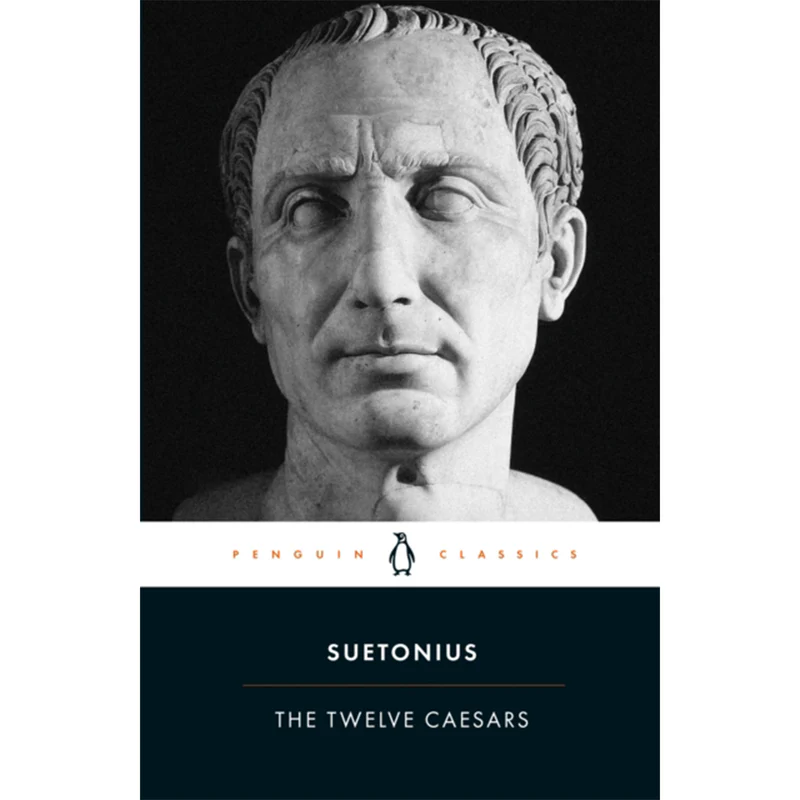
In addition to the famous extra-biblical reference to Jesus, Suetonius gives useful background on the Caesars mentioned in the Bible and historically corroborates other Bible characters including Felix, Berenice and Quirinius (Acts 23-25; Luke 2:2). Suetonius was a private secretary to the Emperor Hadrian and wrote concerning the lives of the Caesars from Julius Caesar (not technically an emperor) until Domitian. Throughout the course of the narratives, there are insightful comments that relate to the biblical account as well as historical affirmation of some other biblical characters. It is worth reading Suetonius alongside Tacitus, Josephus and the Bible.
Julius Caesar
When Julius Caesar visited Gades (Cadiz-Spain), he was overheard to sigh impatiently whilst viewing a statue of Alexander the Great, comparing his lesser achievements with Alexander’s.[i] That reference in itself reminds us of Alexander the Great, of whom his rise to power and fourfold division of his empire was foretold so precisely in Daniel 8:8, 21-22. Also, Julius Caesar displayed wild-beast hunts and stage plays with Marcus Bibulus whilst claiming most of the credit for himself, causing the latter to comment on the Temple of the Heavenly Twins in that Bibulus played Pollux to Caesar’s Castor.[ii] In Acts 28:11 Saul was sailing towards Rome in an Alexandrian ship whose figurehead was the Twin Brothers (Zeus sons Castor and Pollux).
Like other Caesars, Julius Caesar renamed the seventh month after himself, ‘July’.[iii] After he was assassinated by 23 stab wounds, “Public grief was enhanced by crowds of foreigners lamenting in their own fashion, especially Jews, who came flocking to the Forum for several nights in succession.”[iv]Julius Caesar issued several decrees to the favour of Jewish people enabling them to possess Jerusalem and encompass that city with walls and that all the country of the Jews pay tribute to the city of Jerusalem except for the Sabbatical year and that the original ordinances of the high priests of the Jews would remain in force.[v]
Augustus Caesar
Three Caesars are named in the Scriptures, Augustus, Tiberius and Claudius (Luke 2:1; 3:1; Acts 11:28) and the unnamed one referred to in Acts 25-26, who Paul appeals to, was the infamous Nero. Following Augustus Caesar’s death, the month of ‘August’ was transferred to September since Augustus was born in September and the period between his birth and death was known as ‘the Augustan Age.’[vi]
Augustus attitude towards Jewish people in his empire contrasted slightly with that of Julius Caesar. Augustus was for the most part benevolent towards Jewish people although he wrote to Tiberius concerning his eating habits, ‘Not even a Jew fasts so scrupulously on his sabbaths as I have done today.’[vii]Concerning religious observances, Augustus praised his grandson Gaius for not offering prayers when he visited Jerusalem.[viii]
Fascinatingly, when Augustus Caesar was born, Publius Nigidius Figulus the astrologer stated, ‘the ruler of the world is born.’[ix]August may still be the month named after his honour, though Yeshua (Jesus) has the whole of the western calendar marked by His birthdate. When Jesus was born, He fulfilled Micah’s prophecy that the Ruler of Israel, whose origins are from of old and everlasting, would come from Judah and be born in Bethlehem (Micah 5:2-Micah 5:1-Tanakh; cf. Matthew 2:6).
Tiberius Caesar
Tiberius Caesar is mentioned in Luke 3:1 and in Luke 3:1-2 no less than seven biblical characters have been confirmed archaeologically and through extra-biblical sources. They are Tiberius Caesar, Pontius Pilate, Herod Antipas, Philip the Tetrarch, Annas and Caiaphas the high priests and John the Baptist.[x]
Proposals that all citizens should affirm his former and future actions by renaming September and October ‘Tiberius’ and Livius (after his mother) met with his veto.[xi]He was antagonistic towards Jewish people in his empire, abolishing foreign cults in Rome (Egyptian and Jewish) forcing them to burn their religious vestments and other accessories.[xii] The exception to his attitude towards the Egyptian gods seems to be the Tiberius Stela located in the British Museum, where like other Roman Emperors, he makes offerings to the Egyptian gods.[xiii]
Jews of military age were posted to unhealthy regions on the pretext of joining the army and threatened with slavery if they defied the order.[xiv]Consider the above in the light of the Pharisees alongside the Herodians question to Jesus about whether it was lawful to pay taxes unto Caesar or not? Jesus showed them a denarius and drew their attention to the inscription and counselled to render unto Caesar the things that were Caesar’s and to God the things that are His (Matthew 22:15-22).
Tiberius Caesar was known for being stingy. Suetonius states, “he gratified Quirinius, a rich and childless ex-Consul, by executing the highly aristocratic Aemelia Lepida – she was Quirinius’ divorced wife and he accused her of an attempt to poison him twenty years previously!”[xv]There is a endnote in Robert Graves Suetonius translation stating The ‘Cyrenius’ of Luke 2.[xvi] Cyrenius or Quirinius is also mentioned in Josephus on a few occasions and specifically to tax Syria.[xvii]
Gaius (Caligula)
Gaius’ reign was just for three years and ten months, though he honoured his father’s memory by renaming the month of September ‘Germanicus’.[xviii]He completed projects that Tiberius had undertaken, extended the Palace as far as the Forum and converted the shrine of Castor and Pollux into its vestibule (cf. Acts 28:11-the Figurehead of the Twin Brothers).[xix]
Gaius was notorious for smashing statues and inscriptions or the busts of living individuals unless he gave permission and came near to having the works of Virgil and Livy removed from their libraries, claiming Virgil had no talent and Livy was an inaccurate historian.[xx] He even stole the breastplate from Alexander the Great’s Tomb at Alexandria![xxi] Today, some people jump on the above and other instances of the same and argue that history is written by the victors. In some cases that is the case, but the Bible is unusual in that it consistently records military defeats as well as losses and includes the embarrassing and less favourable aspects of generally popular characters in addition to their successes and their positive qualities.
Claudius Caesar
In Acts 11:28, Agabus prophesied that there would be a great famine throughout the whole world which also happened in the days of Claudius Caesar. Suetonius writes that following a series of droughts that caused a scarcity of grain, he took all possible measures to import grain and offering a large bounty for newly built ships transporting grain.[xxii] Josephus mentioned a great famine in Judea in which Queen Helena brought grain in Egypt at great expense[xxiii]and Tacitus notes during Claudius reign there was a shortage of corn, resulting in famine in Rome, that there was no more than fifteen days supply of food in the city and that only heaven’s favour and a mild winter prevented catastrophe.[xxiv]During the time of a famine across the Roman Empire, Claudius invaded Britain in AD43 and considered that in Britain a real triumph could be most readily earned.[xxv]
The famous quote from Suetonius concerning Jesus is during the reign of Claudius Caesar. “Because the Jews at Rome caused continuous disturbances at the instigation of Chrestus, he expelled them from the city.”[xxvi]This is consistent with the majority of other emperors in their treatment of Jews and Christians and most of the earliest believers in Yeshua, were Jewish believers. Suetonius is one of several extra-biblical sources relating to Jesus in addition to other writers that were Roman, Greek, Jewish and Syrian.
Another important reference is in regard to Felix the governor(Acts 23-25). “For Felix he had an equally high regard, giving him command of infantry cohorts and cavalry squadrons, and the Governorship of Judea; this Felix married three queens.”[xxvii]
Nero
Nero was egotistical, highly unpredictable and a monster and savagely murdered members of his own family. Punishments were inflicted on the Christians, described by Suetonius as “a sect professing a new and mischievous belief.”[xxviii]Tacitus mentions Nero blaming the fire in Rome on the notoriously depraved Christians (as they were called) with every refinement.[xxix]Unlike Claudius he felt no compulsion to advance or extend the empire and even considered withdrawing his forces from Britain, though he maintained his forces for the sake of Claudius’ former glory.[xxx]Two important garrison towns, Camulodunum (Colchester) and Verulamium (St Albans) were taken suddenly.[xxxi]
He was fiercely competitive in acting and sporting competitions and had to take centre stage and even destroyed evidence of previous winners by removing statues and smashing them in public latrines.[xxxii]At the Isthmian Games in Corinth he conferred Roman citizenship to the province and gave large cash rewards to the judges who had little choice to award him his prize even when he failed to stay the course.[xxxiii]In Rome, he wore the Olympic wreath on his head and the Pythian wreath in his right hand. In 1 Corinthians 9:24-27, Paul writes about running to win the imperishable crown. He would have been familiar with the Isthmian Games held in that locality as well as the Pythian Games and Olympic Games.
Nero’s men destroyed many apartments and mansions and valuable monuments of historic importance.[xxxiv]He was so vainglorious that he changed names of items and locations in his own honour and Rome, the month of April became known as ‘Neroneus’ and Rome was close to being renamed ‘Neropolis’.[xxxv]Some astrologers predicted that if Nero were forced to leave Rome, he would find an alternative throne in the East, one or two of those stated that would be Jerusalem.[xxxvi] Jerusalem was besieged by Vespasian and later overthrown by his son Titus in AD70, but Israel was reestablished on May 14th 1948 and one day still future all nations will come up to Jerusalem to keep the Feast of Tabernacles (Zechariah 14:16-21). Yeshua the Messiah departed to heaven from the Mount of Olives and will return there (Acts 1:9-12; cf. Zechariah 14:1-4).
Galba, Otho and Vitellius all had short reigns as respective emperors, spanning the gap from the end of Nero’s reign in AD68 to the commencement of Vespasian’s rule in AD69.
Vespasian
On Claudius’ rise to power as emperor, Narcissus gave Vespasian command of a legion in Germany and then he went to Britain subjugated two warlike tribes, fought thirty battles, captured in excess of twenty towns as well as the Isle of Vectis (Isle of Wight).[xxxvii]The Legion II Augusta quickly advanced through Dorset. Roman roads and the Roman settlement, Badbury Rings, can be visited day.
Suetonius wrote of an ancient superstition from the East in that predicting the rulers of the world from Judea.[xxxviii]Suetonius explains this as pertaining to the Romans but adds that the rebellious Jews attributed it to themselves, murdered their Governor, routed the Governor of Syria and captured an eagle.[xxxix]Vespasian with his elder son Titus carried out an assault on the enemy fortress to crush the uprising,[xl] which Titus would complete. This is one of the saddest occasions in Jewish history and the destruction of the Temple was foretold by Jesus the Messiah in Matthew 24:1-2, Mark 13:1-2 and Luke 21:5-6.
Josephus is famous surviving in Masada and for his writings which are an incredibly important extra-biblical source constantly intertwining with biblical history. Suetonius wrote of a distinguished prisoner of Vespasian-Josephus who was adamant he would soon be released by the same man who imprisoned him and who would become the Emperor.[xli]As they say, the rest is history.
Titus
Titus was renowned for his military service in Germany and Britain, then became a barrister in the Roman Forum to advance his reputation before commanding one of Vespasian’s legions in Judea and capturing the substantially fortified cities Tarichaeae and Gamala (in the Galilee region). [xlii]He then completed the conquest of Judea and laid siege to Jerusalem at the end of bitterly fought four-year campaign. The arch of Titus was commissioned by Domitian and depicts soldiers carrying away looted treasure from the temple, including the noticeably the prominent menorahs.[xliii]
Jesus foretold the destruction of the temple in Jerusalem in Matthew 24:1-2, Mark 13:1-2 and Luke 21:5-6 and that there would not be left there one stone upon another. John MacArthur notes that, “The only stones left undisturbed were huge foundation stones that were not actually a part of the temple edifice but formed footings for the retaining wall under the entire temple mount. These can be viewed today in the “Rabbi’s Tunnel” which runs north-south along the western wall. It is a portion of western side of the retaining wall that today is called the Wailing Wall. More of that retaining wall, including the steps used to ascend and descend from the temple mount, has also been uncovered on the southern side.”[xliv]
Suetonius also mentions that Titus nursed a notorious passion for Queen Bernice to whom he had apparently promised marriage[xlv] and that he sent Queen Bernice away for Rome which was painful for both of them.[xlvi]Bernice is mentioned alongside her bother Agrippa the King in Acts 25:13, 23 and 26:30 and MacArthur adds, “Bernice for a while became the mistress of Emperor Vespasian, then of his son Titus, but always returned to her brother.[xlvii]
Domitian
Suetonius explains how Domitian tried to make a name for himself to compare favourably with his brother Titus and in so doing planned an unnecessary expedition to Gaul and Germany and that his father’s friends managed to dissuade him from doing that.[xlviii]Whilst Vespasian and Titus were seated in their official chairs and taking part in the Judean triumph, he had to be content riding on a white horse.[xlix]
Suetonius wrote that Domitian’s agents collected taxes from the Jews in an especially unmerciful manner and additionally took proceedings against those who hid their Jewish origins to avoid tax and even those who lived as Jews yet without professing Judaism.[l]Suetonius recollects a personal note, “As a boy, I remember once attending a crowded Court where the imperial agent had a ninety-year- old man inspected to establish whether or not he had been circumcised.”[li]
Domitian’s blasphemous self-importance matched or even surpassed that of other emperors. He commenced his letters with “Our Lord and God instructs you to do this!” and that also became his regular title in written form and oral form.[lii] On his death nevertheless senators decreed that all inscriptions of him must be effaced and records of his reign destroyed.[liii]What a contrast to the Lord and God of the Bible whom reign is an everlasting reign and his dominion forever (Daniel 7:27; Micah 4:7; Psalm 145:13; Luke 1:33; Revelation 19:6).
Conclusion
In the writings of Suetonius there is significant supplementary detail about the emperors explicitly mentioned in the Bible, Augustus Caesar, Tiberius Caesar, Claudius Caesar and the unnamed one referred to, Nero. There is a massive amount of important historical information that sheds light on the biblical narrative including the reference to Jesus during Claudius’ reign, plus relevant mention of the biblical characters, Felix, Berenice and Quirinius. When read alongside Josephus, Tacitus and the Bible, it becomes increasingly evident that the Bible is a remarkably reliable historical document and that the God of the Bible knows and even foretells the end from the beginning.
[i] Suetonius The Twelve Caesars Translated by Robert Graves Revised with and introduction by Michael Grant (Penguin, 2006; London), p3
[ii] Ibid, p5
[iii] Ibid, p36
[iv] Ibid, p42
[v] Caesar, Caius, Julius by Kaufmann Kohler, Herman Rosenthal JewishEncylopedia.com https://www.jewishencyclopedia.com/articles/3886-caesar-caius-julius
[vi] Suetonius, p105
[vii] Ibid, p91
[viii] Ibid, p98
[ix] Ibid, p99
[x] Lawrence Mykytiuk February 9th 2025 30 People in the New Testament Confirmed Biblical Archaeological Society https://www.biblicalarchaeology.org/daily/people-cultures-in-the-bible/people-in-the-bible/new-testament-political-figures-the-evidence/
[xi] Suetonius, p124
[xii] Ibid, p128
[xiii] https://www.britishmuseum.org/collection/object/Y_EA617
[xiv] Suetonius, p128
[xv] Ibid, p134
[xvi] Ibid, p345
[xvii] The New Complete Works of Josephus Translated by William Whiston Commentary by Paul L. Maier (Kregel, 1999; Grand Rapids), Antiq. 18:1.1; War 7:8.1; sent by Caesar to tax Syria, Antiq. 17:13.5; 18.1.1ff.
[xviii] Suetonius, p157
[xix] Ibid, pp160-161
[xx] Ibid, p169
[xxi] Ibid, p178
[xxii] Ibid, p195
[xxiii] Josephus, Jewish Antiquities, 20:5.2
[xxiv] Tacitus The Annals of Imperial Rome Translated by Michael Grant (Penguin, 1962; Middlesex), p262
[xxv] Suetonius, p194
[xxvi] Ibid, p200-201
[xxvii] Ibid, p202-203
[xxviii] Ibid, p221
[xxix] Tacitus, p354
[xxx] Suetonius, p222
[xxxi] Ibid, p237
[xxxii] Ibid, p226
[xxxiii] Ibid, p226
[xxxiv] Ibid, p236-237
[xxxv] Ibid, p247
[xxxvi] Ibid, p238-239
[xxxvii] Ibid, p283
[xxxviii]Ibid, p283
[xxxix] Ibid, p284
[xl] Ibid, p284
[xli] Ibid, p285
[xlii] Ibid, p297
[xliii] Megan Sauter August 23rd, 2025, The Arch of Titus’ Menorah Panel in Colour A glimpse of what ancient Rome looked like Biblical Archaeological Society https://www.biblicalarchaeology.org/daily/archaeology-today/cultural-heritage/true-colors-the-arch-of-titus/
[xliv] John MacArthur The MacArthur Bible Commentary (Thomas Nelson, 2005 Nashville), p1244
[xlv] Suetonius, p298-299
[xlvi] Ibid, p299
[xlvii] MacArthur, p1490
[xlviii] Suetonius, p304
[xlix] Ibid, p304
[l] Ibid, p312
[li] Ibid, p312
[lii] Ibid, p313
[liii] Ibid, p318