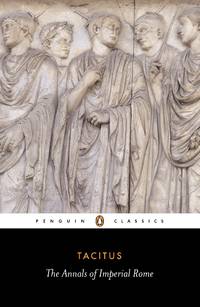
Tacitus provides the important and well-known reference to Jesus being executed during Tiberius’ reign by the governor of Judea, Pontius Pilate. What is not so well known are the other references to the biblical characters Quirinius, Gallio and Felix (Luke 2:2; Acts 18:12-17; Acts 23-24). Furthermore Tacitus illuminates our understanding on Jewish-Roman relations and even refers to yet more biblical characters in his account. Bringing both the Bible and ancient history to life, he details some events in Britain that were directed by Caesars referred to in the Bible that took place simultaneously with New Testament events.
Although Tacitus wrote some vital historical and notable works, not that much is known concerning his life. He was born when Claudius was emperor and probably died after Trajan’s death. He was a senator during Domitian’s reign, took on the consulship in AD97 and governed western Anatolia (a large province of modern-day Turkey).[i] Tacitus had a good education and studied rhetoric and is widely regarded as one of the most significant Roman historians. He worked alongside and corresponded regularly with Pliny the Younger who in a letter to Cornelius Tacitus commented, “I believe that your histories will be immortal: a prophecy which will surely prove correct.”[ii]The annals of Tacitus detail the period from the death of Augustus’ to the end of Nero’s reign.
The Caesars, deification and our calendar
Augustus Caesar, Tiberius Caesar and Claudius Caesar are mentioned in the New Testament (Luke 2:1; 3:1; Acts 11:28; 18:2) and Nero is referred to in Acts as ‘Caesar’ in Acts 25-26 and 28:19. Concerning Augustus, Tacitus observed that Augustus seemed to have exceeded the worship of the gods and desired to have himself venerated in temples with god-like images, by priests and ministers and that following his funeral, Augustus was pronounced a god and decreed a temple.[iii] When reading Suetonius’ ‘The Twelve Caesars’ under the respective titles for the chapter divisions read as follows, ‘II Augustus Afterwards Deified’[iv] and ‘III Claudius Afterwards Deified’.[v]
Near the end of Tacitus Annals, the names of the months are recorded as being changed so that April became ‘Neroneus’, May became ‘Claudius’ and June ‘Germanicus’.[vi] Similarly, Suetonius records that respectively, Julius Caesar had the month ‘July’ named after him[vii] and Augustus also had August named after him.[viii]We still retain the months July and August in the Caesar’s honour though consider Yeshua (Jesus) the most worshipped Jewish person ever who lived during the time of Augustus Caesar and Tiberius Caesar. He never authored a book, travelled far, or had an impressive political career, yet the western dating system of B.C. and A.D. marks his birthdate dividing the whole of our time. Consider that every time you check the time or the date on your calendar!
Quirinius, tax, the Bible and Jewish history
Tacitus mentions Quirinius (cf. Luke 2:1-2 governor of Syria during the census) on three occasions. He is also attested historically as a Bible character with his full name ‘Publius Sulpicius Quirinius’.[ix] Firstly, regarding a trial a defendant by the name of Libo who entrusted his relative Publius Sulpicius Quirinius with a final appeal to Tiberius.[x] Secondly, Aemilia Lepida II was accused of falsely claiming she bore a son to the rich and childless Publius Sulpicius Quirinius[xi] and thirdly Tiberius requested that the senate award a public funeral to Publius Sulpicius Quirinus.[xii]
Luke 2:1-3 informs us that Caesar Augustus issued a decree that all the world should be registered (taxed) and this census first too place when Quirinius was governing Syria. Tacitus notes problems had occurred in Syria and Judea where provincials found their financial burdens oppressive and petitioned for a reduction of direct taxation.[xiii] There was great enmity between the Romans and Jewish people with particular regard to collecting taxes. In Luke 19:1-10, Zaccheus was a chief tax collector who had evidently formerly taken more than his fair share for himself as well as the Romans but after meeting Yeshua came to change his ways and trust in Messiah. Likewise, Matthew, formerly known as Levi, was a tax collector but became one of the Lord’s disciples (Mark 2:13-17; Luke 5:27-32).
Tacitus also writes concerning the expulsion of Egyptian and Jewish religious customs during Tiberius’ reign. Four thousand ex-slaves associated with those superstitions were sent to Sardinia to oppose criminal activities there and it was supposed that if the unhealthy climate killed them the loss would be considered small. If the remaining refused to recant their ‘unholy practices by a given date’ they would have to leave Italy.[xiv]
During Claudius’ reign, he carried out a census confirming there were 5,984, 072 persons in Rome.[xv] Ituraea and Judea were integrated into the province of Syria following the deaths of their monarchs.[xvi]There is a footnote in Tacitus Annals identifying those monarchs, as Sohaemus and Herod Agrippa I,[xvii]and the latter is listed in Acts 12:1-6, 18-23.
There is another footnote in Tacitus Annals with reference to an additional member of the Herodian family. In Nero’s reign, “Two dependant kings were instructed to prepare an army to invade Parthia, and orders were given that the Euphrates should be bridged.”[xviii]The footnote references those two kings as Herod Agrippa II and Antiochus Epiphanes IV (of Commangene).[xix]Herod Agrippa II is mentioned in Acts 25:13-26:32.
Claudius Caesar, The Famine and Britain
There are only two references to Claudius Caesar in the Scriptures, but they are important ones (Acts 11:28; 18:2). “And in these days prophets came from Jerusalem to Antioch. Then one of them, named Agabus, stood up and showed by the Spirit that there was going to be a great famine throughout all the world, which also happened during the days of Claudius Caesar.” (Acts 11:27-28) Tacitus refers to the deaths of two men and one of whom had a dream in which Claudius was wearing a wheaten wreath with inverted ears, which was interpreted as a corn shortage. Furthermore whitening vine leaves were understood as a prediction of the death of Claudius that autumn.[xx]
Tacitus thought the real reason for their deaths was the accusation that they had lent their house as a meeting place for the ballet-dancer Mnester I and Poppaea Sabina .[xxi]More significantly however, Tacitus described the actual famine which did relate to a shortage of corn and it was established that there was only fifteen days supply of corn in Rome and apparently only heaven’s special favour and a mild winter prevented catastrophe![xxii]
Suetonius also attested the famine. “Once after a series of droughts had caused a scarcity of grain, a mob stopped Claudius in the Forum and pelted him so hard with curses and stale crusts that he had difficulty in regaining the Palace by a side-door; and as a result he took all possible steps to import grain, even during the winter months – insuring merchants against the loss of their ships in stormy weather (which guaranteed them a good return on their ventures), and offering a large bounty for every new grain-transport built, proportionate to its tonnage.”[xxiii]
Additionally, Josephus noted that “Under these procurators that great famine happened in Judea, in which Queen Helena brought grain in Egypt at great expense, and distributed it to those that were in want, as I have related already.”[xxiv]
Sometimes the span of two millennia of history, can seem too far to bridge or even fathom. Yet Tacitus wrote of Roman involvement closer to home including wars in Britain. There are still the visible reminders of Roman roads and places of historical interest that relate to the Caesars mentioned in the Bible. Tacitus states that Boudicca was flogged and her daughters raped, the Icenian chiefs had their hereditary estates taken from them as if the Romans possessed the whole country and the king’s relatives were treated like slaves.[xxv]
The Iceni subsequently rebelled and they hated the soldiers who had recently become established at a settlement at Camulodunum (Colchester).[xxvi] “Moreover, the temple erected to the divine Claudius was a blatant stronghold of alien rule, and its observances were a pretext to make the natives appointed as its priests drain the whole country dry.”[xxvii]
One can visit Colchester Castle today and the Claudius’ temple foundations are underneath the castle. The guidebook ‘Colchester Castle 2000 Years of History’ states:
“The Romans who sought protection in the great Temple of Claudius, and who looked for comfort in the strength and status of the building, waited for help to arrive.
The help never came for them. The full horror of being trapped inside the burning temple whilst listening to the cries of the enemy closing in, before being overcome by fear and smoke, sword and fire, would have been a horrifying ordeal…”[xxviii]
Gallio, Tacitus and the Bible
In Acts 18, Paul was ministering at Corinth and he found a certain Jew named Acquilla, born in Pontus, who had come from Italy with his wife Priscilla since Claudius had ordered that all the Jews were to depart from Rome (Acts 18:2). Crispus, the ruler of the synagogue believed in the Lord with all his household (Acts 18:8). Paul continued teaching there for six months, whilst Gallio was a proconsul of Achaia and Paul was taken to the bema (judgement seat) being accused of worshipping God contrary to the law.
Gallio responded to his Jewish audience that if it were a matter of wicked crimes or wrongdoing, he would bear with them, but he considered it a matter of words and names and their own law, counselled for them to look to it themselves since he did not want to be a judge in such matters. He drove them from the judgement seat and then the Greeks took Sosthenes, the ruler of the synagogue and beat him before the judgement seat but Gallio took no notice.
Tacitus writes that Junius Gallio determined that ex-Guardsmen should be permitted to sit in the fourteen rows at the theatre reserved for the gentry outside the senate. Tiberius sternly reprimanded him by letter advising that they were to receive orders from the emperor only and he was ejected from the senate and later from Italy. Since he chose to stay in Lesbos and that was considered to agreeable for him, he was taken back to Rome remaining in private custody by officials.[xxix] Later, in Nero’s reign and following his brother Seneca’s death which frightened him and whilst appealing for his life, “Gallio was denounced as a public enemy and parricide”.[xxx]
Felix, Jewish History, Tacitus and the Bible
In Acts 23, there was a plot to by a group of Jewish men to kill Paul and on learning that he was a Roman citizen, he was sent by the Roman commander to Felix the governor. Felix himself was married to a Jewish wife Drusilla (Acts 24:24). Ananias the high priest came down with the elders to give evidence to the governor against Paul. Paul gave his defence in that he believed all things written in the Law and the Prophets and that he had found hope in God and the resurrection of the dead both for the just and unjust.
Felix procrastinated and after two years, Porcius Festus succeeded Felix and wanting to do the Jews a favour, left Paul bound. Note, Felix was interested about what Paul had to say about righteousness, self-control and the judgement to come, but never repented and turned to the Lord. Felix was afraid when Paul preached, but he failed to recognise the urgency of Paul’s gospel message and procrastinated. He sent Paul away for when it would be more convenient for him to call Paul. Apathy and procrastination are as dangerous as a refusal to reject the way of salvation.
Tacitus wrote that Antonius Felix governed Judea and backed with major influence believed himself free to commit any crime.[xxxi]The Jews had rioted when Gaius ordered his own statue to be set up in their temple and by poor judgement and ill placed discipline stimulated further outbreaks.[xxxii]
Judea was divided since the Samaritans were governed by Felix and the Galileans under Ventidius resulting in unrestrained long-standing feuds which would have only worsened if the imperial governor of Syria had not intervened.[xxxiii]Jewish people who had dared to kill Roman soldiers were swiftly executed. Claudius opted to empower Quadratus to deal with Cumanus and Felix though he displayed Felix as one of the judges to silence his accusers and Cumanus was condemned for the faults of both and then Judea was again restored to peace.[xxxiv]
Tacitus on Jesus
Tacitus provides us with one of the most important extra-biblical accounts concerning Jesus. A fire with devastating consequences had burnt much of Rome and Tacitus blamed the fire on the Christians and brutally punished them by crucifixion, burning, or being torn to pieces by dogs. He confirmed that Jesus was executed during Tiberius reign by the governor of Judea, Pontius Pilate and that His followers who originated from Judea were also to be found in Rome.[xxxv]
There are Roman, Jewish, Greek and there is even a Syrian source, Mara Bar Serapion, which confirm many historical details about Jesus, the Man from Galilee. Despite the awful and prolonged persecution of His disciples, instead of diminishing, the number of followers of Jesus the Messiah rapidly increased and spread like wildfire across the Roman empire.
Felix procrastinated and he never turned to trust in Jesus as Messiah. Too many people are sitting on the fence and will regret that for the rest of eternity. Paul was brought up at the feet of Gamaliel and stood before the Council and uttered timeless counsel, which we would all do well to heed. If what the disciples preached were of men it would come to nothing, just like Theudas, or Judas of Galilee. But if it is of God, you cannot overthrow it, lest you even be found to fight against God (Acts 5:33-42).
The Psalmist explained how to respond to Messiah and tells us what we must all do:
“Kiss the Son, lest He be angry, and you perish in the way, when His wrath is kindled but a little. Blessed are all those who put their trust in Him.” (Psalm 2:12)
[i] Tacitus The Annals of Imperial Rome Translated by Michael Grant (Penguin, 1962; Middlesex), p7
[ii] The Letters of the Younger Pliny Translated with an introduction by Betty Radice (Penguin, 1969; London), p208
[iii] Tacitus, p36-37
[iv] Suetonius, p45
[v] Ibid, p183
[vi] Tacitus, p374
[vii] Suetonius, p36
[viii] Ibid, p105
[ix] Mykytiuk February 9th, 2025 30 People in the New Testament Confirmed Biblical Archaeological Society https://www.biblicalarchaeology.org/daily/people-cultures-in-the-bible/people-in-the-bible/new-testament-political-figures-the-evidence/
[x] Tacitus, p89
[xi] Ibid, p127
[xii] Ibid, p139
[xiii] Ibid, p96
[xiv] Ibid, p116
[xv] Ibid, p238
[xvi] Ibid, p253
[xvii] Ibid, p253
[xviii] Ibid, p277
[xix] Ibid, p277
[xx] Ibid, p226-227
[xxi] Ibid, p226
[xxii] Ibid, p262
[xxiii] Suetonius, p195
[xxiv] The new complete works of Josephus Translated by William Whiston Commentary by Paul L. Maier (Kregel, 1999; Grand Rapids), Jewish Antiquities 20:5:2, p648
[xxv] Tacitus, p318
[xxvi] Ibid, p318
[xxvii] Ibid, p318
[xxviii] Colchester Castle 2000 Years of History p19 www.cimuseums.org.uk
[xxix] Tacitus, p196
[xxx] Ibid, p369
[xxxi] Ibid, p267
[xxxii] Ibid, p267
[xxxiii] Ibid, p267
[xxxiv] Ibid, p267
[xxxv] Ibid, p354